Complete Guide to Understanding and Preventing Pilling in Flame-Retardant Fabrics
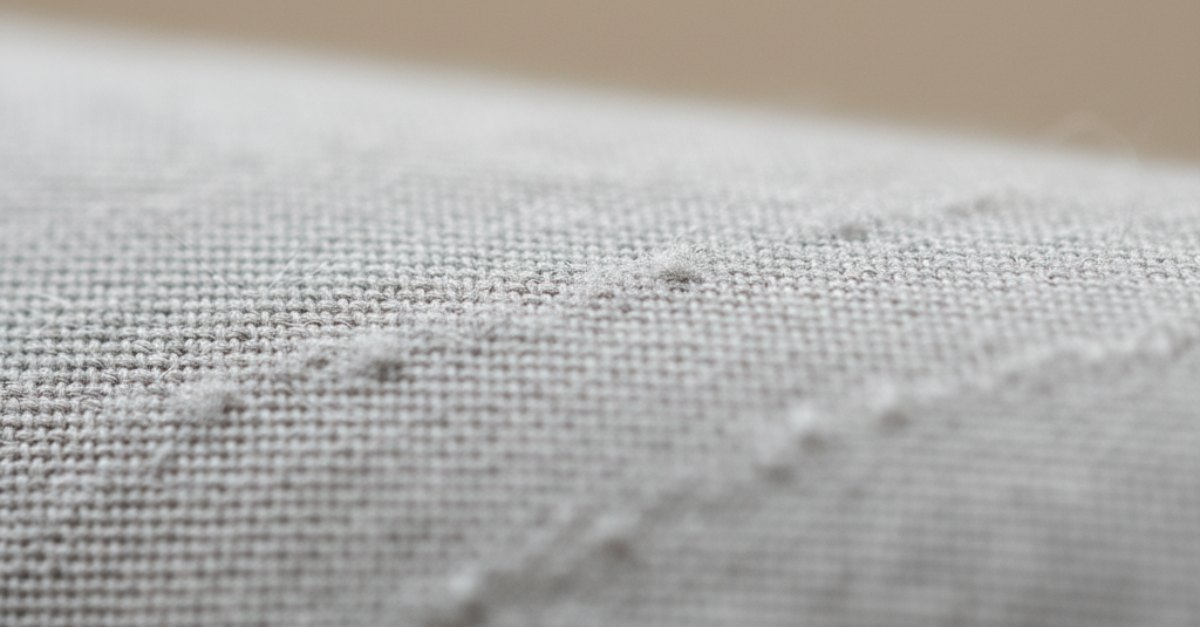
UNWANTED EFFECT – PILLING
Pilling is an undesirable effect on fabrics, consisting of the formation of small balls of tangled fibres on the surface of the fabric. This causes ageing or prolonged wear over very short periods of time. Consequently, pilling is an effect that must be avoided and must be anticipated from the initial fabric design through the appropriate selection of fibres, yarn structure, and final finishing operations.
In the Research and Development Department, together with the Quality Department, we closely study the phenomenon of pilling and develop strategies to prevent its formation. We perform numerous tests both at the beginning of fabric construction and on the finished fabric.
To avoid or minimise pilling, a thorough understanding of the fibres to be used, as well as the structure of the yarns and fabrics in question, is necessary.
The following aspects should be taken into account:
- Parameters affecting the fibre.
- Parameters that impact the thread.
- Parameters that affect the tissue.
- Parameters affecting dyeing and finishing.

FIBRES
We will review the main fibre parameters and how they affect pilling formation.
- Nature of the fibre:
Synthetic fibres have a higher pilling capacity than natural fibres. This is due to their greater strength and flexibility.
- Fibre fineness:
The finer the fibre (lower Dtex), the greater the propensity to form hairiness on the thread, since it will have greater ease of migration to the surface of the thread.
- Fibre curling:
Smooth cross-sections promote fibre migration to the outside of the yarns and therefore pilling.
- Fibre Length:
The shorter the fibre length, the greater the propensity for pilling to form, since it will more easily migrate to the surface of the thread, and therefore of the fabric.
Dabedan pays close attention during the spinning process to avoid breaking the fibres, especially during the carding process, since breaking the fibres will shorten the length diagram.
YARNS
The structure of the yarn also has an important influence on the pilling tendency of finished textile articles.
Let’s look at the most important parameters below, and how they influence the generation of pilling.
- Thread title:
The higher the yarn count (thicker the yarn), the greater the number of fibres per section, and therefore the greater the pilling capacity.
- Twisting and retwisting of the threads:
The greater the twist of the yarn, the less pilling will form, since the fibres will be more closely linked and, therefore, their migration to the surface will be more difficult.
- Finishes that the thread can present:
A singed thread that has had its surface hair removed will have a lower pilling capacity.
- Mixture of fibres of different lengths:
In a mixture of tall and short fibres, the short fibres tend to migrate to the surface of the yarn, giving the appearance of excessive surface hairiness.
- Mixture of different materials:
By mixing fibres of different fineness and length, the finest will stay on the inside, while the thickest and shortest will migrate to the outside.
In general, in openwork fabrics, we can say that:
- The longer the hem, the greater the formation of pilling.
- The higher the binding coefficient, the lower the pilling formation.
- The greater the density in % or the higher the grammage, the lower the tendency to pilling.
PREPARATION OPERATIONS ON TISSUES:
To minimise pilling, Dabedan subjects its fabrics to a series of pre-treatments:
- Brushing:
Its purpose is to eliminate fibres and prepare the surface for subsequent treatments.
- Scorched:
Singeing removes the surface hairiness of the fabric by burning or charring it. It is used as a prerequisite for brushing.
- Hours:
Its purpose is to cut the superficial fibres of the tissue (villi). It is also used as a pre-brushing procedure.
DYEING AND FINISHING OPERATIONS ON FABRICS
In the final finishing processes, Dabedan subjects its fabrics to dyeing, sizing and finishing operations, which are directly related to the possible future formation of pilling.
– Scouring and desizing:
The complete elimination of waxes and lubricants from the fibres and threads will reduce the ability to pill, as there are no substances that promote it.
– Heat Setting:
Both steaming and heat setting reduce the tendency for pilling to form, because they “fix” the fibres in a certain position, thus preventing their subsequent easy movement to the external areas of the fabric.
It is crucial to control the optimal heat-setting temperature for each type of fibre.
– Softening:
Softeners decrease the coefficient of friction between fibres, thereby reducing their tendency to pilling.
– Sizing and anti-pilling agents:
They are sizing products, in the form of resins, that act as binding or fixing elements for the fibres.
As can be seen, the number of variables that influence pilling formation is significant. If we also consider the interaction of the various parameters, this makes the study of pilling complex.
Ultimately, understanding why some fabrics pill more easily and which ones are prone to pilling is key to making better decisions when manufacturing and caring for garments. Applying the right techniques in material selection and the production process results in a much more durable and attractive end product. Choosing pilling-resistant fibres and finishes not only extends the life of the fabric but also ensures a better experience for the consumer.
At Dabedan, with over 40 years of experience, we anticipate this phenomenon from the very conception and design of the fabric.
For us, the combination of technical, technological, and design knowledge is fundamental.
Follow us:

Subscribe to our newsletter
Receive all communications in your email to stay up to date with our news, as well as news and advice about the sector.
Latest published articles


Do you need advice?
We collaborate with you to develop custom designs tailored to the needs of each project, creating the fabric according to aesthetic, quality, or usage requirements.
Get in touch with us, and we will advise you on our products, or request a free sample.
